For decades, the digital world has relied on a foundational promise: that our most sensitive information is protected by mathematical locks so complex that no computer in existence could pick them. Every time you log into your bank account, send a secure message, or access confidential corporate data, you are relying on public-key cryptography. But an invisible, ticking clock has started. A paradigm-shifting technological breakthrough is accelerating toward us, bringing with it the Y2Q encryption crisis.
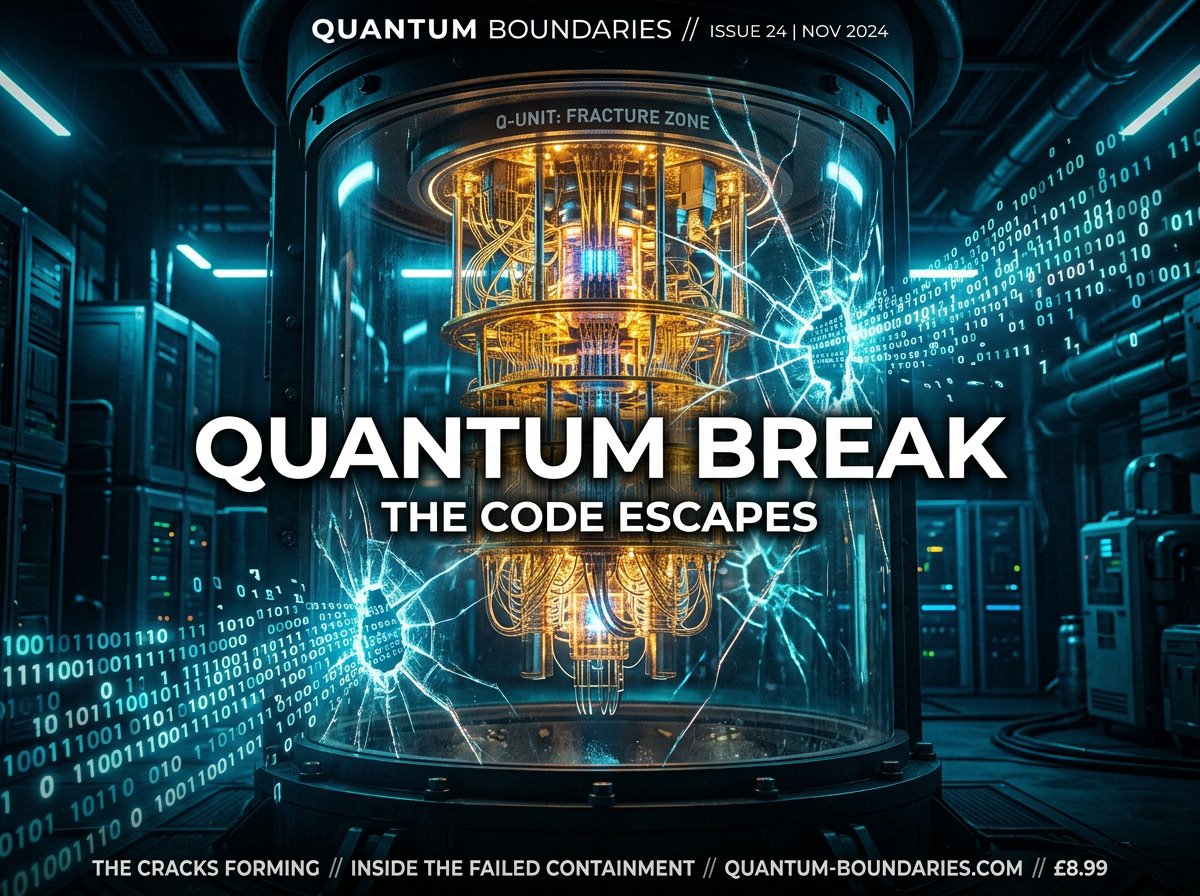
Y2Q, or “Years to Quantum” (often culminating in “Q-Day”), represents the exact moment when a large-scale, fault-tolerant quantum computer becomes powerful enough to shatter modern encryption. Unlike the infamous Y2K bug—which was a simple formatting error in dates—the Y2Q encryption crisis represents the complete invalidation of the cryptographic assumptions that hold our digital society together.
In this deep dive, we will explore the mechanisms behind this impending threat, the chilling reality of modern cyber-espionage, and the future research and development aimed at saving our digital infrastructure.
Understanding the Quantum Threat
To grasp the magnitude of the Y2Q encryption crisis, we must first understand how we protect data today. Currently, protocols like RSA (Rivest-Shamir-Adleman) and ECC (Elliptic Curve Cryptography) secure the internet. These systems rely on the fact that classical computers—even the most powerful supercomputers—are terrible at specific mathematical problems, such as factoring impossibly large prime numbers.
A classical computer essentially functions like a librarian trying every single key on a keyring until one fits. For standard RSA encryption, this brute-force approach would take a classical computer billions of years.

Enter the quantum computer. Utilizing the bizarre laws of quantum mechanics—such as superposition and entanglement—quantum computers process information not as binary bits (1s and 0s), but as qubits, which can exist in multiple states simultaneously. In 1994, mathematician Peter Shor published “Shor’s Algorithm.” He proved mathematically that a sufficiently advanced quantum computer could factor large prime numbers exponentially faster than a classical machine.
With Shor’s Algorithm, the impenetrable lock that would take billions of years to pick can suddenly be cracked in a matter of hours or minutes. The moment a machine is built with enough stable qubits to run this algorithm, the Y2Q encryption crisis transitions from theory to reality.
“Harvest Now, Decrypt Later”: The Present Danger
One might assume that because Q-Day is still years away, we have plenty of time to react. This assumption is a dangerous fallacy. The Y2Q encryption crisis is not just a future event; it is an active, ongoing threat due to a strategy known as “Harvest Now, Decrypt Later” (HNDL).
State-sponsored hackers, cybercriminals, and intelligence agencies are currently vacuuming up massive troves of encrypted data across the globe. They are stealing encrypted military secrets, proprietary corporate intellectual property, and personal health records. They cannot read this data today, but they don’t need to. They are simply storing it in massive data centers, waiting for the day they possess a quantum computer capable of cracking it open.

Because of the HNDL threat, the Y2Q encryption crisis is retroactive. If your organization has data that must remain confidential for 10, 20, or 50 years, the security of that data has already been compromised by the impending arrival of quantum computing.
Timelines and Trajectories: When is Q-Day?
Predicting exactly when the Y2Q encryption crisis will hit its apex is a subject of intense debate among physicists and cybersecurity experts. In 2021, a joint report by the Department of Homeland Security (DHS) and the National Institute of Standards and Technology (NIST) estimated that approximately 6,000 stable logical qubits would be required to break standard public-key encryption.
Technology giants are racing to reach this milestone. Much like Moore’s Law dictates the exponential growth of classical computing, “Rose’s Law” suggests that the number of qubits in a quantum computer will double every year. IBM has stated they expect to achieve their first practical quantum advantage by late 2026, and their roadmap targets thousands of logical qubits by the early 2030s.
While some optimistic estimates place Q-Day in the late 2030s, the Cloud Security Alliance previously chose April 14, 2030, as a symbolic target date to encourage urgent public discussion. Regardless of the exact year, the consensus is clear: the hardware will arrive, and the Y2Q encryption crisis is an inevitable destination.

Future Research and Development: The Shield of PQC
Thankfully, the cybersecurity world is not waiting idly for the collapse of digital trust. The frontline defense against the Y2Q encryption crisis lies in Post-Quantum Cryptography (PQC).
Unlike current methods, PQC algorithms are entirely new mathematical puzzles designed to be secure against both classical and quantum computers. For example, Lattice-based cryptography hides information inside highly complex, multi-dimensional geometric grids that even quantum algorithms cannot efficiently untangle.
In August 2024, after years of intense global competition and peer review, the National Institute of Standards and Technology (NIST) released the first finalized post-quantum cryptographic standards (FIPS 203, 204, and 205). This release was a watershed moment, officially firing the starting gun for the global migration away from vulnerable systems.

In addition to algorithmic changes, future R&D is heavily focused on Quantum Key Distribution (QKD). QKD uses the principles of quantum mechanics to transmit encryption keys. If a hacker attempts to intercept the key, the very act of observation alters the quantum state, instantly alerting the sender and receiver to the breach. Together, PQC and QKD represent humanity’s best effort to outmaneuver the Y2Q encryption crisis.
A Roadmap for Survival: What We Must Do Now
Mitigating the Y2Q encryption crisis will require the largest technological migration in human history. To survive the transition, organizations must adopt a framework of “Cryptographic Agility”—the ability to swap out old encryption algorithms for new ones without tearing down entire IT systems.
To prepare, global leaders must embrace a three-step action plan:
- Discovery and Inventory: You cannot protect what you cannot see. Companies must build a Cryptographic Bill of Materials (CBOM) to discover exactly where vulnerable RSA and ECC algorithms are hiding deep within their application architectures.
- Assessment and Prioritization: Organizations must categorize their data based on lifespan. High-value data with a long shelf-life (like financial records or national security intel) must be migrated to post-quantum standards immediately to thwart HNDL attacks.
- Execution and Hybridization: The transition won’t happen overnight. For a period, organizations will need to run hybrid systems, layering traditional encryption with new PQC standards to ensure zero downtime.
For more insights into how shifting architectures impact broad organizational security, you can explore advanced cryptography protocols on wikimess.com, an expanding resource for the evolving digital landscape. Furthermore, global think tanks like the World Economic Forum are aggressively pushing governments to mandate post-quantum compliance deadlines for critical infrastructure.

Conclusion: Surviving the Transition
The Y2Q encryption crisis is unique in the history of technology. It is a slow-moving catastrophe where the date of impact is unknown, but the mechanism of destruction is mathematically guaranteed. We know exactly how our systems will fail, and thanks to relentless cryptographic research, we know exactly how to fix them.
The challenge now is not theoretical; it is purely logistical. The migration to post-quantum cryptography will cost billions of dollars and take a decade of grueling, unglamorous engineering work to rewrite the foundational code of the internet. If we wait for a quantum computer to be officially switched on, we will have already lost the war. By acknowledging the reality of the Y2Q encryption crisis today, we can build a resilient, quantum-safe digital world that will survive the ultimate test of tomorrow.
Frequently Asked Questions (FAQ)
1. What exactly is the Y2Q encryption crisis?
The Y2Q encryption crisis (Years to Quantum) refers to the impending threat where fault-tolerant quantum computers will become powerful enough to break the public-key cryptography (like RSA) that currently secures the internet, exposing global data to malicious actors.
2. Why can quantum computers break passwords so quickly?
Classical computers secure data using large prime numbers, a mathematical problem that takes them billions of years to reverse. Quantum computers can use “Shor’s Algorithm” to process these massive numbers exponentially faster, solving the problem in mere hours or minutes.
3. What is a “Harvest Now, Decrypt Later” attack?
This is a strategy where hackers steal and stockpile heavily encrypted, sensitive data today. Even though they cannot read it right now, they are saving it for the future when they possess a quantum computer capable of cracking the encryption.
4. When is Q-Day expected to happen?
There is no exact date, but experts estimate that a quantum computer capable of breaking current encryption could emerge between the early 2030s and 2040s, based on the rapid, exponential scaling of stable qubits.
5. How are we defending against the Y2Q encryption crisis?
The primary defense is Post-Quantum Cryptography (PQC). Organizations like NIST have recently released standardized algorithms (like lattice-based cryptography) that are mathematically designed to be immune to both classical and quantum computer attacks.
Discovering Quantum-Vulnerable Encryption in Apps
This presentation offers a clear look at how developers can detect and upgrade legacy cryptographic protocols buried within their software to defend against upcoming post-quantum threats.
Click this link to read our important and interesting Technology articles as soon as they are published!