As the global climate crisis intensifies in 2026, humanity is searching for unprecedented solutions to cool our rapidly warming planet. Despite decades of warnings, transitioning away from fossil fuels and reducing greenhouse gas emissions has proven to be a marathon, not a sprint. We are now running out of time. Enter a controversial but highly compelling field of climate engineering: Solar Radiation Management (SRM).
Once relegated to the realm of science fiction, Solar Radiation Management is now a focal point of intense scientific debate, multimillion-dollar research grants, and global policy discussions. But what exactly is this technology? Could it be the emergency brake we need to halt rising temperatures, or does it risk unleashing a new era of unpredictable weather patterns?
In this comprehensive guide, we will demystify the science behind climate engineering, look at the hard evidence, evaluate the risks, and explore the future of Research and Development in 2026 and beyond.
What is Solar Radiation Management?

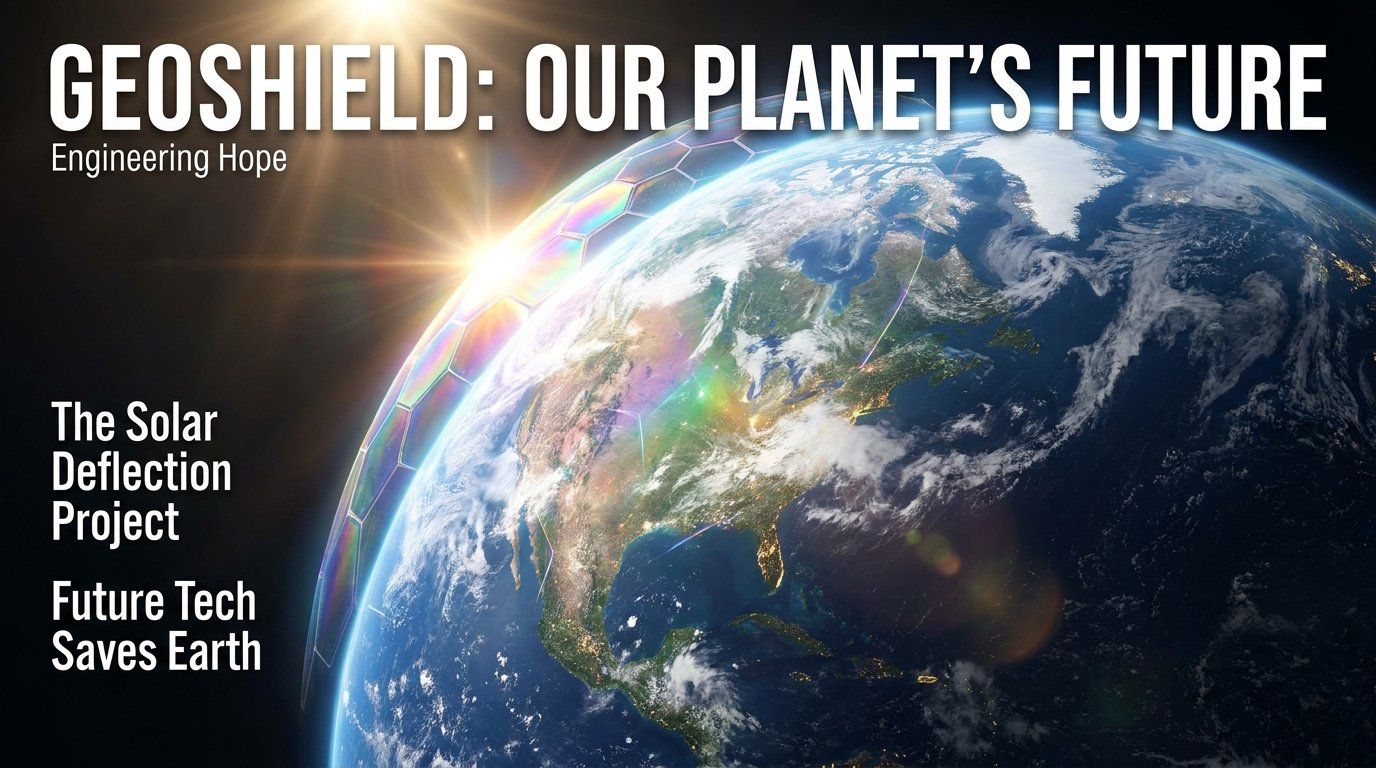
At its core, Solar Radiation Management is a theoretical approach to combating climate change by reflecting a small percentage of inbound sunlight (solar radiation) back into space. The fundamental goal is to increase the Earth’s “albedo,” or reflectivity, thereby reducing the amount of heat trapped by greenhouse gases.
It is crucial to understand that Solar Radiation Management does not reduce carbon dioxide in the atmosphere; it does not stop ocean acidification or tackle the root cause of climate change. Instead, it acts as a thermal bandage—a temporary cooling mechanism intended to buy humanity the time needed to transition to a zero-carbon economy.
Nature has actually provided us with a proof of concept. When Mount Pinatubo erupted in 1991, it spewed millions of tons of sulfur dioxide into the stratosphere. This natural aerosol veil reflected enough sunlight to lower global temperatures by roughly 0.5°C for over a year. Scientists looked at this phenomenon and asked: What if we could mimic this effect deliberately and safely?
Key Techniques in Climate Engineering
There is no single way to deploy this technology. Researchers have proposed several theoretical mechanisms for Solar Radiation Management, but three primary techniques dominate the current scientific landscape.
1. Stratospheric Aerosol Injection (SAI)

Stratospheric Aerosol Injection (SAI) is the most heavily researched and debated form of Solar Radiation Management. The concept involves using fleets of specialized high-altitude aircraft or balloons to disperse highly reflective particles—such as sulfur dioxide, calcium carbonate, or engineered titanium dioxide—into the stratosphere (about 10 to 30 miles above the Earth’s surface).
Once injected, these particles would spread globally via high-altitude winds, creating a microscopic, reflective blanket that reduces the sunlight reaching the surface. Because the stratosphere is highly stable, particles can remain suspended there for a year or more.
2. Marine Cloud Brightening (MCB)

Marine Cloud Brightening is a more localized approach. It targets the low-lying stratocumulus clouds that cover vast stretches of the world’s oceans. Using fleets of autonomous, wind-powered vessels, scientists propose spraying fine mists of seawater into the air.
As the water evaporates, microscopic salt crystals are left behind. These crystals act as “cloud condensation nuclei.” The water vapor already present in the sky gathers around these extra particles, creating clouds composed of more numerous, smaller water droplets. These denser clouds are significantly brighter and whiter, meaning they reflect much more sunlight back into space than natural clouds.
3. Cirrus Cloud Thinning (CCT)
While SAI and MCB aim to reflect sunlight away from Earth, Cirrus Cloud Thinning (CCT) works a bit differently. Cirrus clouds are high-altitude, wispy ice clouds that don’t block much incoming sunlight, but they do trap outgoing heat escaping from the Earth. By injecting ice-nucleating particles (like bismuth tri-iodide) into these clouds, scientists believe they can force the ice crystals to grow larger and heavier, causing them to fall out of the sky as precipitation. Thinning these clouds allows more trapped terrestrial heat to escape into space.
The Evidence: Current Research in 2026

You might be wondering: is this just theory, or is real testing happening? As of 2026, the scientific community has moved aggressively from theoretical modeling into rigorous laboratory environments. No large-scale, outdoor deployment has been authorized, but controlled experiments are well underway.
One of the most notable initiatives is the SOLACE project (Sustainable Organic and Inorganic Laboratory Aerosols for Climate Engineering), funded by the Simons Foundation. Led by an interdisciplinary team at the University of British Columbia, this 2026 research seeks to evaluate the effectiveness of engineered aerosols.
The evidence gathered so far is both promising and cautionary. For instance, laboratory tests using advanced environmental cloud chambers have confirmed that certain inorganic particles can efficiently nucleate ice. However, initial results from SOLACE also showed that titanium dioxide particles could unintentionally promote the formation of polar stratospheric clouds containing nitric acid. This is a critical finding because those specific clouds are known to accelerate the depletion of the ozone layer.
By upgrading cloud chambers to mimic the exact pressure and extreme cold of the upper troposphere, scientists are successfully observing the lifecycle of these reflective aerosols without having to release them into the actual sky.
The Risks and Ethical Dilemmas

Despite the potential for rapid planetary cooling, Solar Radiation Management carries monumental risks. The atmosphere is a highly complex, interconnected system. Changing the temperature balance in one region can have catastrophic butterfly effects elsewhere.
- Disruption of Weather Patterns: Extensive modeling shows that while Solar Radiation Management could lower global average temperatures, it might drastically alter precipitation patterns. For example, some models suggest that poorly calibrated SAI could suppress the Asian and African summer monsoons, which billions of people rely upon for agriculture. Increased risks of drought in the Amazon basin and changes to North Atlantic hurricane activity are also major concerns.
- Termination Shock: If we rely on Solar Radiation Management to mask the warming effects of ever-increasing CO2 levels, we become hostages to the technology. If the aerosol injection were suddenly halted—due to war, economic collapse, or sabotage—the “masked” warming would hit the planet all at once. Temperatures could spike several degrees in a matter of a few years, causing ecological devastation far worse than gradual climate change.
- Data and Cyber Security: As climate engineering relies heavily on vast networks of sensors, autonomous fleets, and supercomputer modeling, securing this data is paramount. The infrastructure required to manage the global thermostat must be immune to cyber threats. For an in-depth look at how next-generation encryption protects critical infrastructure, check out the resources on advanced data security in climate models on wikimess.com, an expanding resource for the evolving digital landscape.
Future R&D and Global Governance

As we look toward the remainder of the decade, the focus of Solar Radiation Management is splitting evenly between technological R&D and geopolitical governance. Who gets to control the Earth’s thermostat?
In 2026, the UK Advanced Research and Innovation Agency (ARIA) launched a £56.8 million research programme specifically to build an evidence base to support the effective governance of these climate cooling approaches. The UK Parliament’s POSTnote on the subject highlights the geopolitical nightmare: what happens if one climate-vulnerable nation decides to deploy aerosols unilaterally? What if a rogue state attempts to weaponize regional weather modification?
To answer these questions, international coalitions like the Degrees Initiative are funding projects in developing nations to ensure that the Global South has a voice in evaluating SRM. Furthermore, major scientific summits, such as the 2026 Gordon Research Conference on Climate Engineering, are bringing together the brightest minds to establish safe, accountable guidelines for future outdoor testing.
Future R&D will heavily feature AI and Machine Learning. By utilizing AI, researchers can better predict the microphysical behavior of aerosols and map out the safest possible deployment scenarios before a single particle is released into the wild.
Conclusion
Solar Radiation Management is not a magic bullet, nor is it an excuse to keep burning fossil fuels. It is a highly experimental, high-stakes medical intervention for a dangerously feverish planet. While the science holds incredible promise for reducing near-term climate suffering, the environmental and geopolitical risks require the utmost caution. As 2026 research continues to demystify climate engineering, humanity must decide not just if we can control the climate, but how we can do so justly, equitably, and safely.
Frequently Asked Questions (FAQ)
Q1: Does Solar Radiation Management remove carbon from the air?
No. Solar Radiation Management only masks the warming effect of greenhouse gases by reflecting sunlight. To remove carbon, we must rely on separate strategies known as Carbon Dioxide Removal (CDR) and emission reductions.
Q2: Have we already started spraying aerosols into the sky?
No. As of 2026, research into Solar Radiation Management is confined to advanced computer modeling and closed laboratory experiments. No large-scale, intentional atmospheric deployment has been approved or executed.
Q3: What is “Termination Shock”?
Termination shock is the rapid, devastating spike in global temperatures that would occur if an active Solar Radiation Management system were suddenly shut off while greenhouse gas levels in the atmosphere remained high.
Q4: Who regulates climate engineering?
Currently, there is no single global governing body that strictly regulates climate engineering. However, international organizations, scientific councils, and government bodies (like the UN and UK Parliament) are actively working in 2026 to draft accountable governance and public trust frameworks.
Click this link to read our important and interesting Technology articles as soon as they are published!