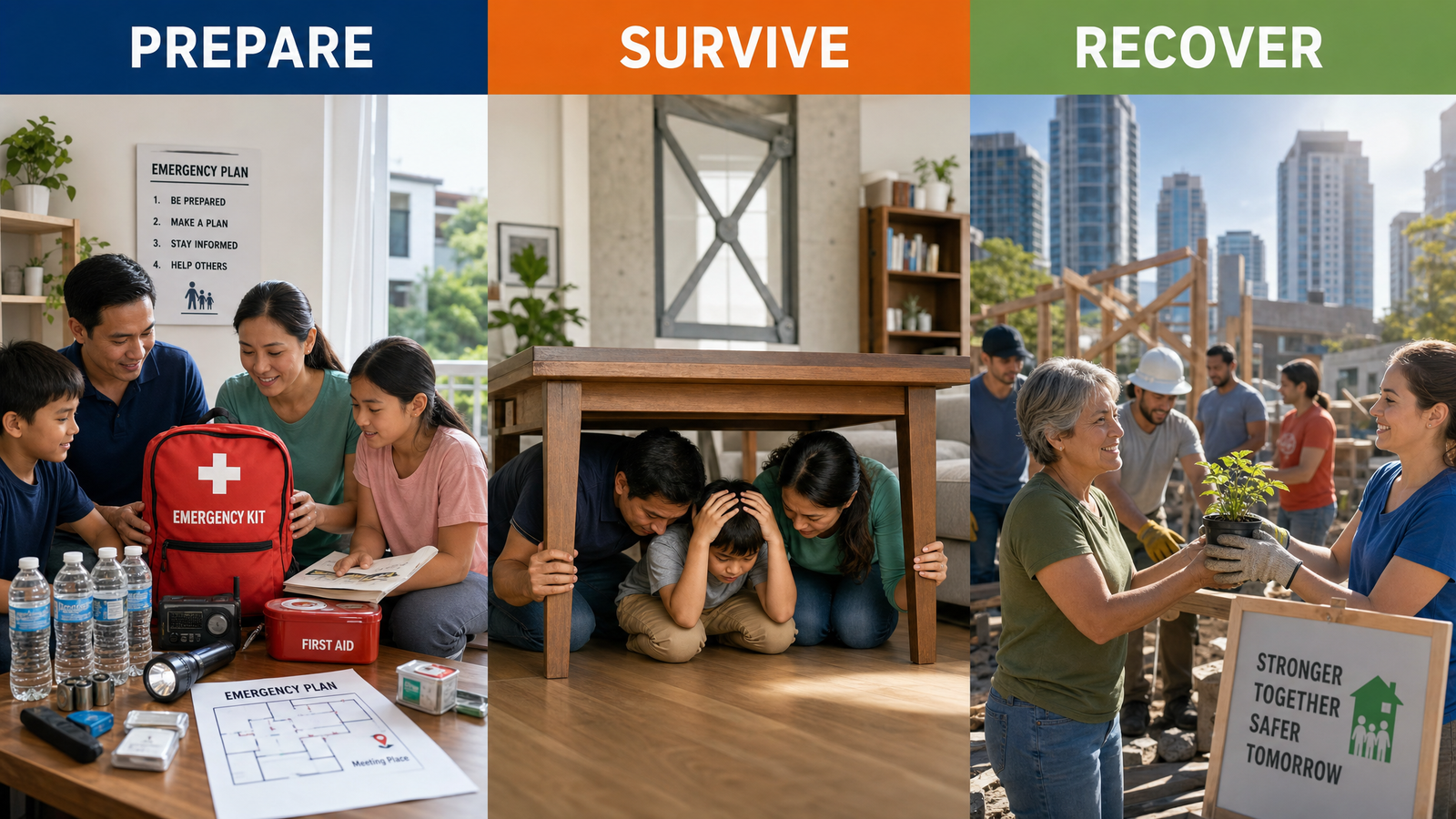
You cannot stop an earthquake. No technology on Earth can predict the exact day the ground will move, and no government can cancel one. But here is the part most people miss: you can still beat an earthquake. Being earthquake-beating doesn’t mean stopping the shaking — it means preparing before it starts, acting correctly while it happens, and recovering safely after it ends. Do those three things well, and you dramatically reduce injury, damage, and fear.

The stakes are real. The U.S. Geological Survey estimates that about 500,000 detectable earthquakes occur worldwide every year, and roughly 100 of them cause damage. In the United States, FEMA estimates earthquake losses average over $14 billion annually. Yet research from the Earthquake Country Alliance consistently shows the same thing: most earthquake injuries come not from collapsing buildings, but from falling objects and people moving unsafely during shaking. In other words, the majority of harm is preventable — and prevention starts at home, today.
Before an Earthquake: Win the Battle in Advance
Most of an earthquake is decided before the ground ever moves. The hours you spend preparing are worth more than anything you can do in the 30 seconds of shaking.

Secure Your Space
Walk through your home the way a seismologist would. Anything tall, heavy, or breakable is a projectile waiting for an earthquake to launch it.
- Anchor heavy furniture — bookshelves, dressers, cabinets — to wall studs with brackets or straps.
- Strap appliances and water heaters to the wall. A toppled water heater can rupture a gas line, turning a quake into a fire.
- Keep heavy objects off high shelves and store breakables in low, latched cabinets.
- Hang mirrors and framed pictures away from beds and couches — anywhere people sit or sleep.
FEMA’s QuakeSmart program calls this “non-structural mitigation,” and it’s the cheapest insurance you’ll ever buy. Most fixes cost less than a dinner out.
Build a Family Emergency Plan

An earthquake rarely strikes when everyone is conveniently together at home. Decide now:
- Meeting points: one near your home, one outside your neighborhood.
- Communication: an out-of-area contact everyone texts, because local networks often jam after a major earthquake while long-distance texts get through.
- Roles: who grabs the kit, who handles pets, who checks on elderly neighbors.
Practice it. The Great ShakeOut, held every October, is the world’s largest earthquake drill — more than 50 million people participate annually. Joining takes ten minutes and turns theory into muscle memory.
Assemble an Earthquake Kit

The Red Cross and Ready.gov agree on the core list:
- Water (one gallon per person per day, for at least three days)
- First aid kit and any essential medications
- Battery-powered or hand-crank radio
- Flashlight and extra batteries
- Fire extinguisher (ABC-rated)
- Sturdy shoes and work gloves
- Copies of important documents
Two more skills complete your earthquake readiness: learn basic first aid, and learn where your gas, water, and electrical shutoffs are — and how to use them. After a major earthquake, broken gas lines cause more destruction than the shaking itself in many urban fires.
Identify Safe Spots in Every Room

In each room, know your spot before you need it: under a sturdy table or desk, or against an interior wall — always away from windows, glass, and anything that can fall. Doing this once takes five minutes. Doing it during an earthquake takes time you won’t have.
During an Earthquake: Drop, Cover, and Hold On

When shaking starts, you typically have one to two seconds before strong motion makes movement dangerous. That’s why every major safety agency — USGS, FEMA, the Red Cross, and the CDC — teaches the same three words: Drop, Cover, and Hold On.
Why This Method Works
Studies of earthquake injuries show that people who try to run during shaking are far more likely to be hurt than those who immediately drop. Strong shaking can exceed the force of gravity sideways — you physically cannot stay on your feet, and moving puts you in the path of falling objects.
- Drop to your hands and knees so the earthquake can’t knock you down.
- Cover your head and neck with your arms, and crawl under a sturdy desk or table if one is nearby.
- Hold On to your shelter until the shaking stops completely — strong earthquakes can shift furniture across a room.
Special Situations

- In bed: Stay there. Cover your head and neck with a pillow. Studies after the 1994 Northridge earthquake found many injuries came from people cutting their feet on broken glass while trying to get out of bed in the dark.
- Indoors: Stay away from windows, exterior doors, and glass. Do not run outside during shaking — building exteriors shed bricks, glass, and facades.
- Outdoors: Move to open ground, away from buildings, trees, streetlights, and power lines, then drop.
- In a car: Pull over safely, stop, and stay inside with your seatbelt on until shaking ends. Avoid stopping under overpasses or near buildings.
After an Earthquake: Recover Smart, Not Fast

The earthquake ending doesn’t mean the danger has. Aftershocks, gas leaks, and unstable structures cause a significant share of post-quake casualties.
The First Hour

- Check for injuries — yourself first, then others. Provide first aid before moving anyone with serious injuries unless they’re in immediate danger.
- Check utilities. Inspect gas, water, and electrical lines. If you smell gas, open windows, shut the valve if you can, and leave immediately. Do not flip switches or light flames — a single spark can ignite leaked gas.
- Put on sturdy shoes before walking anywhere. Broken glass is the most common post-earthquake injury source.
- Stay out of damaged buildings. Aftershocks can finish what the main earthquake started.
The Days After
Expect aftershocks — they can continue for days or weeks. Listen to a battery-powered radio for official instructions, conserve phone battery, and text instead of calling. If your home is damaged, document everything with photos before cleanup for insurance claims.
The Bottom Line: Beating an Earthquake Is a Choice

An earthquake gives no warning, but it also gives no surprises. We know exactly what it will do: shake hard, throw unsecured objects, break glass, and stress utilities. Every one of those threats has a known, low-cost counter — and you now have all of them.
Anchor your furniture this weekend. Pack your kit this month. Practice Drop, Cover, and Hold On with your family tonight. When the next earthquake arrives, you won’t stop it — but you will beat it.
FAQ
Q: How long does an earthquake usually last? A: Most earthquakes last 10–30 seconds, though major ones can shake for a minute or more. Aftershocks may continue for days or weeks afterward.
Q: Should I stand in a doorway during an earthquake? A: No. This is outdated advice from old adobe construction. In modern buildings, doorways are no stronger than any other part of the structure. Drop, Cover, and Hold On under a sturdy table instead.
Q: How much water should I store for earthquake preparedness? A: At least one gallon per person per day for a minimum of three days, with two weeks recommended for high-risk seismic zones.
Q: What is the safest place in a house during an earthquake? A: Under a sturdy table or desk, or against an interior wall away from windows, mirrors, and heavy furniture that could fall.
Q: Can earthquakes be predicted? A: No. Scientists can identify high-risk zones and probabilities, but no method can predict the exact time or location of an earthquake. Early-warning systems like ShakeAlert provide only seconds of notice.
reference links
- USGS Earthquake Hazards Program — https://www.usgs.gov/programs/earthquake-hazards
- Ready.gov Earthquakes — https://www.ready.gov/earthquakes
- FEMA Earthquake Safety — https://www.fema.gov/emergency-managers/risk-management/earthquake
- American Red Cross Earthquake Safety — https://www.redcross.org/get-help/how-to-prepare-for-emergencies/types-of-emergencies/earthquake.html
- CDC Earthquake Preparedness — https://www.cdc.gov/earthquakes/
- Great ShakeOut — https://www.shakeout.org/
AI Image Generated by ChatGPT and lovart.ai
Click this link to read our important and interesting articles as soon as they are published!