We are officially living in the “Year of Major Experiments,” a term industry analysts use to describe 2026. For the past few years, the narrative surrounding artificial intelligence has been dominated by digital assistants and conversational interfaces. However, a fundamental transformation has occurred. Artificial Intelligence has moved beyond the “copilot” phase—where models simply assisted human tasks—to an “agentic” phase, where intelligent systems independently plan, execute, and verify multi-step workflows.
This is the dawn of Agentic AI. It represents not merely an improvement in processing speed, but a fundamental change like digital labor. If you are still thinking of AI as a sophisticated chatbot that generates emails or writes code snippets on command, it is time to upgrade your mental model.

Defining the Era: What is Agentic AI?
Agentic AI refers to autonomous systems capable of understanding a broad goal, formulating a multi-step plan, and taking coordinated actions across different platforms to achieve it. Unlike earlier waves of AI adoption that focused on supporting or automating isolated tasks, these autonomous AI agents learn, self-correct, and optimize with minimal human oversight.
To grasp the magnitude of this shift, consider how you interact with a traditional chatbot versus an autonomous agent. A chatbot waits for your prompt, gives an answer, and stops. It operates on an instruction-based model. Agentic AI, on the other hand, operates on an intent-based model. You give it a high-level objective—such as “research this competitor and compile a comprehensive due diligence report”—and the agent figures out the intermediate steps required to accomplish that goal.
The Engine of Autonomy: Orchestration and Memory
How do these systems actually function without human hand-holding? In 2026, the focus of AI development shifted drastically from merely increasing model parameters to enhancing “agentic orchestration” and internal reasoning loops.
- Persistent Memory: The 2026 generation of AI agents features persistent memory systems that allow them to learn from past actions and operate toward long-term goals without constant human intervention.
- Self-Verification: Agents are supported by “self-verification” protocols, where they autonomously check the accuracy of their work through internal feedback loops. This effectively solves the error-accumulation problem that previously hindered complex, multi-hop tasks.
- Context Integration: The Model Context Protocol (MCP) has become the standard for this integration, enabling agents to securely access proprietary data streams and treat them as searchable context.
A prime example of this technological leap is Google’s Deep Research Max. Designed for “maximum comprehensiveness,” this system executes up to 160 search queries per task and processes approximately 900,000 input tokens to produce cited, professional-grade reports. It iteratively refines its strategy, identifying knowledge gaps and seeking out primary material autonomously.
The Enterprise Reality: Chasing the Runaway Train
Interest in Agentic AI is everywhere, but true scale is rare. Currently, three-quarters of enterprise leaders report that they are adopting agentic AI. However, the reality on the ground paints a different picture. Only a small minority have it running in meaningful production beyond “agentish” chatbots, and true scaled multiagent systems are rarer still.
This massive gap between ambition and implementation is the defining story of the corporate world today. The technology is a runaway train, and the enterprise is the heavy load it has to pull.
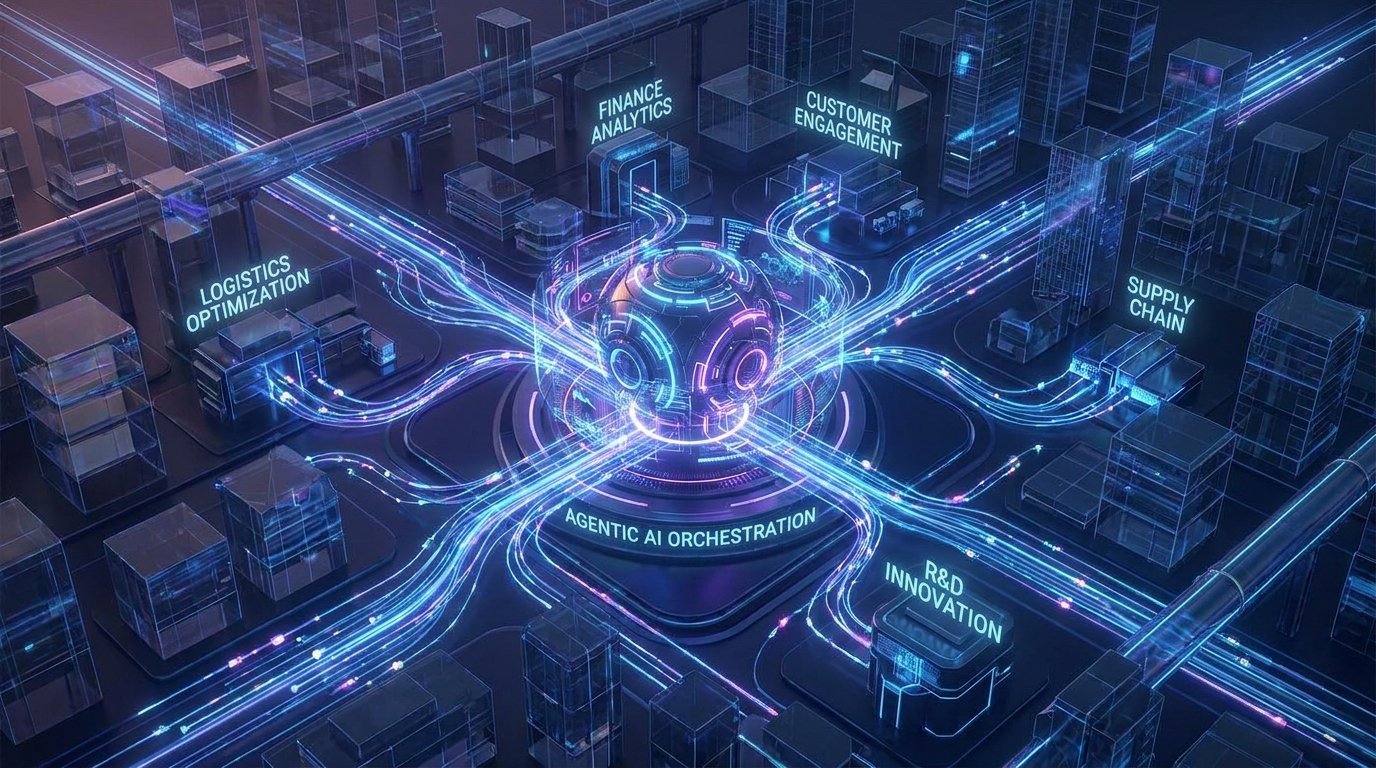
[Image 2 Placement – Business Impact Section]

Reimagining Workflows for ROI
So, why are so many companies stuck in pilot purgatory? According to leading strategists, organizations generating the most value from AI are those that re-design workflows and operating models, rather than simply automating existing processes. If you merely bolt an intelligent agent onto a broken legacy process, you will only see incremental efficiencies.
The boldest enterprises that successfully implement Agentic AI are already reaping massive rewards. Enterprises leading in agentic AI are cutting costs by 15% to 20% across functions. Their approach is highly strategic: they prioritize speed first, growth second, and cost third.
By fundamentally reimagining human-dependent processes—where judgment, coordination, and context have traditionally constrained automation—these organizations are shifting human capacity toward oversight, ethical judgment, and shaping strategic intent. For those looking to dive deeper into enterprise tech transitions, you can explore more insights on our dedicated Wikimess AI insights page.
The Multi-Agent Ecosystem
The era of the single AI assistant is rapidly giving way to coordinated systems of specialized agents.

We are witnessing the rise of Agent-to-Agent (A2A) collaboration. The A2A protocol enables AI agents built by different developers and operating in different enterprises to communicate, negotiate tasks, and collaborate securely. When combined with tools like the MCP, organizations can build agent ecosystems that extend across value chains, handing off tasks, sharing context, and coordinating actions between entirely different companies.
In customer experience, for example, the shift is profound. By 2028, 60 percent of brands are expected to use Agentic AI to enable more streamlined, one-to-one customer interactions. Agents have moved from reactive ticket resolution to proactive, concierge-style service—monitoring systems proactively and resolving issues using real-time data.
Governance and “The Intelligence Layer”
You cannot simply unleash autonomous agents into a corporate environment without robust safety mechanisms. Governance gaps currently drive “agentic sprawl” in many organizations. Traditional policy documents cannot control autonomous, tool-invoking systems.

Governance in the age of Agentic AI requires what experts call “graduated autonomy”: a structured progression through shadow mode, supervised mode, guided autonomy, and finally, full autonomy. Each tier is earned through demonstrated performance.
Furthermore, large companies must own their “intelligence layer”. This means mapping the company’s actual business context, KPIs, and unique drivers directly onto the data so agents truly understand how the business functions. When agents operate against this highly tailored, “honest data”, hallucinations and inconsistent answers are drastically reduced.
It’s About People, Not Just Algorithms
Perhaps the most surprising truth about Agentic AI is that its success relies more on human psychology and change management than on pure code. Success with agentic AI implementation is 70% people and change management, 20% data and technology, and only 10% algorithms.

The gap between what organizations need and what their people are equipped to deliver is widening fast. Consequently, upskilling is an urgent imperative. Enterprises that train more than half their workforce are the furthest along in scaling these technologies. For example, organizations like Capgemini have invested heavily in building internal AI fluency at scale, training over 150,000 employees.
The leaders in this space do not ask, “How do I deploy agents?” They ask, “How do we work differently?”. They recognize that 60% of tech stack and agentic deployment decisions now sit with the CIO or CTO, emphasizing the need for a true business-tech partnership.
Future Research and Development
As we look beyond 2026, Agentic AI is cementing its place as a cornerstone of the future. Agentic AI Orchestration ranks firmly among the Top 10 Emerging Technologies of 2026.

The implications for R&D across scientific disciplines are staggering. AI is no longer a separate field but the “engine” driving transformation.
- Archaeology: AI serves as a “scout” capable of processing massive datasets from LiDAR far faster than human researchers.
- Engineering and Software: The rise of “vibe coding” allows creators to simply articulate high-level goals to AI agents rather than writing manual syntax, democratizing software development.
- Sustainability: Agentic systems are expected to intersect with emerging tech like “everything-to-grid” energy and precision fermentation, driving global resilience.
To understand how these advanced algorithms connect with broader computational concepts, you can review foundational machine learning advancements that made this autonomy possible.
Conclusion
The shift from chatbots to Agentic AI is not a passing trend; it is the establishment of a new cognitive operating model for businesses. While the technology arrived faster than anyone anticipated, the burden now lies on organizational leadership to adapt. Companies must redesign their workflows, implement graduated governance, and prioritize massive human upskilling. The organizations creating the most impact in 2026 will be those re-designing workflows, governance models, and operating structures around coordinated human-AI ecosystems rather than isolated AI deployments. The train has left the station. The only question now is whether your enterprise has the readiness to catch it.
Frequently Asked Questions (FAQ)
1. What exactly is Agentic AI? Agentic AI refers to autonomous artificial intelligence systems that can understand high-level goals, plan multi-step actions, and execute tasks across various workflows without requiring constant human prompts or supervision.
2. How does Agentic AI differ from traditional chatbots? Traditional chatbots are instruction-based; they wait for a specific prompt, execute a single task, and stop. Agentic AI is intent-based. It takes a broader goal, determines the necessary steps, navigates different systems autonomously, and self-verifies its work to achieve the final outcome.
3. Why are companies struggling to scale Agentic AI? The main hurdles are not technological, but operational. Organizations often layer AI onto legacy processes instead of redesigning their workflows. Additionally, success is heavily dependent on change management (70%) and upskilling, which many companies neglect.
4. What is the “Intelligence Layer”? The intelligence layer is the specific business context, KPIs, and specialized data mapped onto the AI architecture. It ensures that the autonomous agents understand the unique drivers of a specific business, reducing errors and hallucinations.
5. Which business functions benefit the most from these agents? Complex, coordination-heavy functions such as procurement, customer experience, finance, compliance, and supply chain benefit tremendously from the end-to-end orchestration provided by Agentic AI.
6. Are human workers being completely replaced? No. While Agentic AI takes over repeatable, logic-driven work, human capacity shifts toward oversight, strategic planning, ethical judgment, and managing the “guardrails” that guide the autonomous systems.
Click this link to read our important and interesting Technology articles as soon as they are published!