Open a map of Europe and trace the Baltic coast. Squeezed between Poland and Lithuania sits a small patch of land that belongs to Russia. It is more than 1,000 kilometres from Moscow, with no land link to the rest of the country. It looks like a mapping error. It isn’t.
The story of how Russia got Kaliningrad is a story of medieval knights, a devastating war and a wartime promise that was never fully finished on paper. It also matters far beyond the history classroom. Right now this small territory sits at the centre of some of Europe’s tensest headlines.
In this guide, we walk through the history in seven clear steps and explain why each one matters. Then we look at where things stand today, and where they could head next.
What Is Kaliningrad?
Kaliningrad is Russia’s westernmost region, officially called Kaliningrad Oblast. It covers roughly 15,000 square kilometres, slightly bigger than the US state of Connecticut, and is home to around one million people. Its main city shares the name. For most of its life that city was known as Königsberg. abc
Because it has no land border with the rest of Russia, it is called an exclave. Poland lies to the south, Lithuania to the north and east, and the Baltic Sea to the west. Both neighbours belong to NATO and the European Union. That is why the question of how Russia got Kaliningrad comes up so often.
Three things make the region unusual:
- A year-round naval base. The port of Baltiysk gives Russia’s Baltic Fleet an ice-free outlet to the sea.
- Amber. The coast is often described as holding the majority of the world’s known amber deposits.
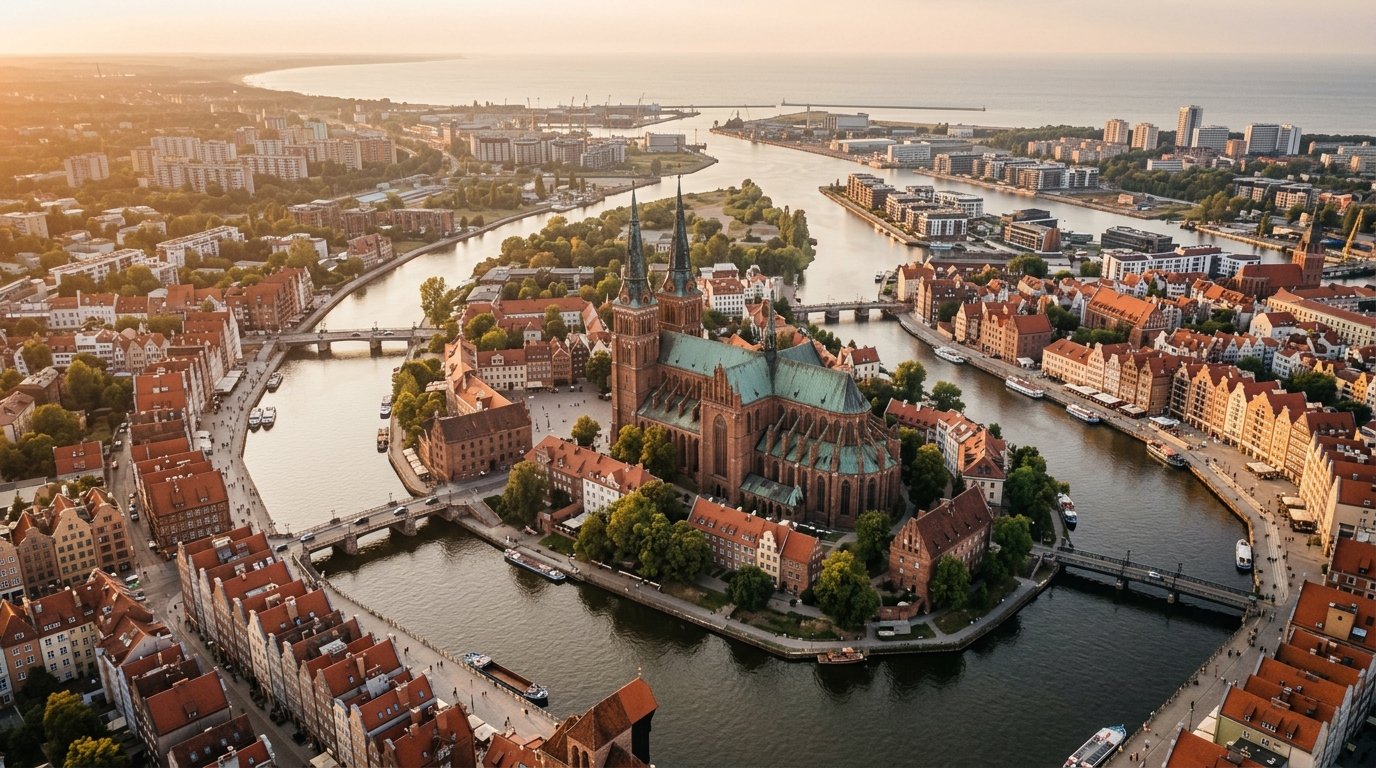
- A layered identity. Prussian, German, Soviet and Russian history sit side by side: a Gothic cathedral on one island, Soviet apartment blocks across the river.

How Russia Got Kaliningrad in 7 Steps
Step 1: Start With Königsberg’s Prussian Roots (1255–1918)
The Teutonic Knights, a medieval military order, founded a fortress here in 1255 during the Northern Crusades. Over the centuries the town grew into a major Baltic trading city. It became the capital of the Duchy of Prussia, and in 1701 a Prussian king was crowned there.
The philosopher Immanuel Kant spent his life in the city. So did the famous “Seven Bridges of Königsberg” puzzle, which helped launch graph theory.
Why this step matters: for about 700 years the city was German-speaking and Prussian, not Russian. Any honest answer has to start there.

Step 2: See How Versailles Cut East Prussia Off (1919–1939)
After World War I, the Treaty of Versailles gave newly independent Poland access to the sea through the so-called Polish Corridor. This physically separated East Prussia from the rest of Germany. Königsberg became the capital of an isolated province.
Why this step matters: exclaves were not a Russian invention. Germany faced the same geographic puzzle first, and it turned the region into a political flashpoint long before the Soviets arrived.

Step 3: Follow the War to 1945
In August 1944, British bombing destroyed much of the historic centre. In April 1945 the Soviet Red Army stormed the fortress city. The German garrison surrendered on 9 April.
Why this step matters: facts on the ground shape diplomacy. The Soviet Union already held the city when the Allied leaders sat down to redraw Europe.

Step 4: Read the Potsdam Agreement (July–August 1945)
At the Potsdam Conference, Stalin’s delegation asked for the transfer of Königsberg and the surrounding area. The conference agreed in principle to the transfer, subject to expert examination of the actual frontier, and the American and British leaders said they would support it at the coming peace settlement. You can read the draft wording yourself in the Potsdam Conference records published by the US State Department’s Office of the Historian. state
Here is the detail most people miss. The agreement was “in principle” and “pending” a final peace settlement. A full peace treaty with Germany was never signed in the usual way. That gap is why debates about how Russia got Kaliningrad still resurface today.
Why this step matters: the legal wording explains why some commentators call the status unfinished, while most governments treat it as settled.

Step 5: Watch the Soviet Makeover (1946–1991)
In 1946 the city was renamed Kaliningrad, after the Soviet official Mikhail Kalinin, who died that year. The region became Kaliningrad Oblast inside the Russian republic. The remaining German population was expelled or left in the late 1940s. Settlers from across the Soviet Union replaced them.
The region became heavily militarised and was largely closed to foreigners for decades.
Why this step matters: this is how a conquered German city became a Russian-speaking one. By the 1990s most residents had been born under Soviet rule and knew no other home.
Step 6: Understand the 1990 Settlement
When Germany reunified, the 1990 “Two Plus Four” treaty fixed Germany’s borders. Germany formally accepted them and gave up claims to former eastern territories. Germany and Poland also confirmed their shared border in a separate treaty.
Why this step matters: this is the closest thing to a final settlement. It is the main reason no major government today seriously challenges Russian control of the region.
Step 7: Live Through the 1991 Shock
When the Soviet Union collapsed, Lithuania and Belarus became independent countries. Overnight, Kaliningrad became an exclave. Travel and cargo now had to cross foreign borders. By 2004, both Poland and Lithuania were inside NATO and the EU, and a quiet Soviet backwater had become a strategic puzzle.
Why this step matters: this is the moment geography began to cause the friction we still see today.
Is Russia’s Ownership Legal? Facts vs Claims
Let’s separate what is documented from what is argued.
Documented facts:
- Soviet forces captured the city in 1945.
- The Allied leaders agreed in principle to its transfer at Potsdam.
- Germany accepted its post-war borders in 1990.
Points of debate:
- Some commentators note the “pending a peace conference” wording. As far as we know, no major government formally contests Russian sovereignty.
- A headline on the Moscow Times site this month refers to Moscow accusing Lithuania of provoking a territorial dispute. Treat that as a claim from one side, not an established fact. It does show how sensitive the subject has become. themoscowtimes
Whatever your politics, how Russia got Kaliningrad is documented in treaties, conference papers and archives. You can check it yourself.
Kaliningrad Today: Why Such a Small Place Matters
Three factors keep this region in the news.

1. Military weight. The Baltic Fleet is based here, and Russia has deployed Iskander missile systems in the region, according to Russian and Western statements. Troop numbers have reportedly shifted as the war in Ukraine continues.
2. The Suwałki Gap. A narrow land corridor along the Polish-Lithuanian border links the Baltic states to the rest of NATO. It sits between Kaliningrad and Belarus. Like other strategic chokepoints around the world, a small strip of land can matter far more than its size suggests.
3. Trade and transit. Goods reach the region by sea or through neighbouring territory. In 2022, Lithuania restricted rail transit of EU-sanctioned goods. Russia protested, and the EU later clarified its guidance. It was a clear example of how sanctions can collide with geography.
The Current Situation (October 2026)
Knowing how Russia got Kaliningrad helps make sense of the headlines. Here is what the latest reporting says.

- Nuclear warning. On 1 October, Vladimir Putin told the Valdai forum that Russia would consider using all types of weapons if Kaliningrad were directly attacked, while saying Moscow had no intention of attacking anyone. euronews
- NATO exercises. NATO countries have held several exercises along Kaliningrad’s borders in recent months. NATO describes them as defensive and has criticised Russia’s nuclear rhetoric. euronews
- Border reinforcement. Lithuania announced about 100 soldiers would help guard its border with Kaliningrad for two weeks, calling it a preventive step. Officials stressed the situation there remains calm. themoscowtimes
- Drones and GPS interference. Poland reported finding a spy drone near the Kaliningrad border in February. Further reports describe GPS disturbances affecting aircraft in the area. kyivindependent
- Not everyone expects the worst. Baltic voices have pushed back against doom scenarios from Western experts. kyivindependent
A fair summary: tension is high and the rhetoric is sharp. Reports of direct conflict over Kaliningrad itself remain absent.
Why This Matters for Professionals (Practical Takeaways)
Understanding how Russia got Kaliningrad is more than trivia. If you travel, trade, build online businesses or work with international clients, geopolitics can touch your day-to-day.
- Travellers: check your own government’s travel advice before any trip near the region. Most Western governments currently advise against travel to Russia.
- Online sellers and logistics teams: sanctions rules and Baltic shipping routes can change quickly. Verify requirements with official sources.
- Pilots, drone operators and navigation-dependent businesses: GPS interference reports in the Baltic area are worth monitoring.
- Content creators and researchers: misinformation spreads fast around this topic.
To follow the story reliably:
- Start with primary documents such as treaties and conference records.
- Compare at least three credible outlets from different countries.
- Separate verified events from official claims and rhetoric.
- Check dates, because this story changes quickly.
FAQ
Did Russia buy or conquer Kaliningrad?
Neither exactly. The short version of how Russia got Kaliningrad is military conquest in 1945, followed by Allied agreement at Potsdam and the 1990 border settlement.
Why isn’t Kaliningrad connected to the rest of Russia?
Because of the 1991 collapse of the Soviet Union. Lithuania and Belarus became independent, leaving the region cut off by land.
Why was Königsberg renamed Kaliningrad?
In 1946 it was named after Mikhail Kalinin, a senior Soviet official who died that year.
Can tourists visit Kaliningrad?
Entry rules change, and most Western governments currently advise against travel to Russia. Check official advice from your own government first.
Could Kaliningrad change hands?
Most analysts see a change of sovereignty as very unlikely without a dramatic upheaval. This is an informed assessment, not a prediction.
Final Thoughts and Future Prediction
The story of how Russia got Kaliningrad shows that borders are rarely as simple as they look on a map. Kaliningrad passed from medieval knights to Prussian kings, then German rule and Soviet conquest, and finally became a Russian exclave. It is held in place by wartime agreements, the 1990 settlement and the facts on the ground.
Looking ahead, these are the most plausible paths. They are informed estimates, not certainties:
- Most likely: a tense standoff continues. Exercises, rhetoric, border incidents and sanctions disputes persist without open war.
- Likely friction: transit and hybrid pressure. Expect more arguments over cargo, airspace, GPS interference and drones.
- Low probability, high impact: escalation. The stakes are high enough that every side is signalling caution while preparing for the worst.
- Very unlikely: a change of sovereignty. This would require a dramatic shift in the wider European security picture.