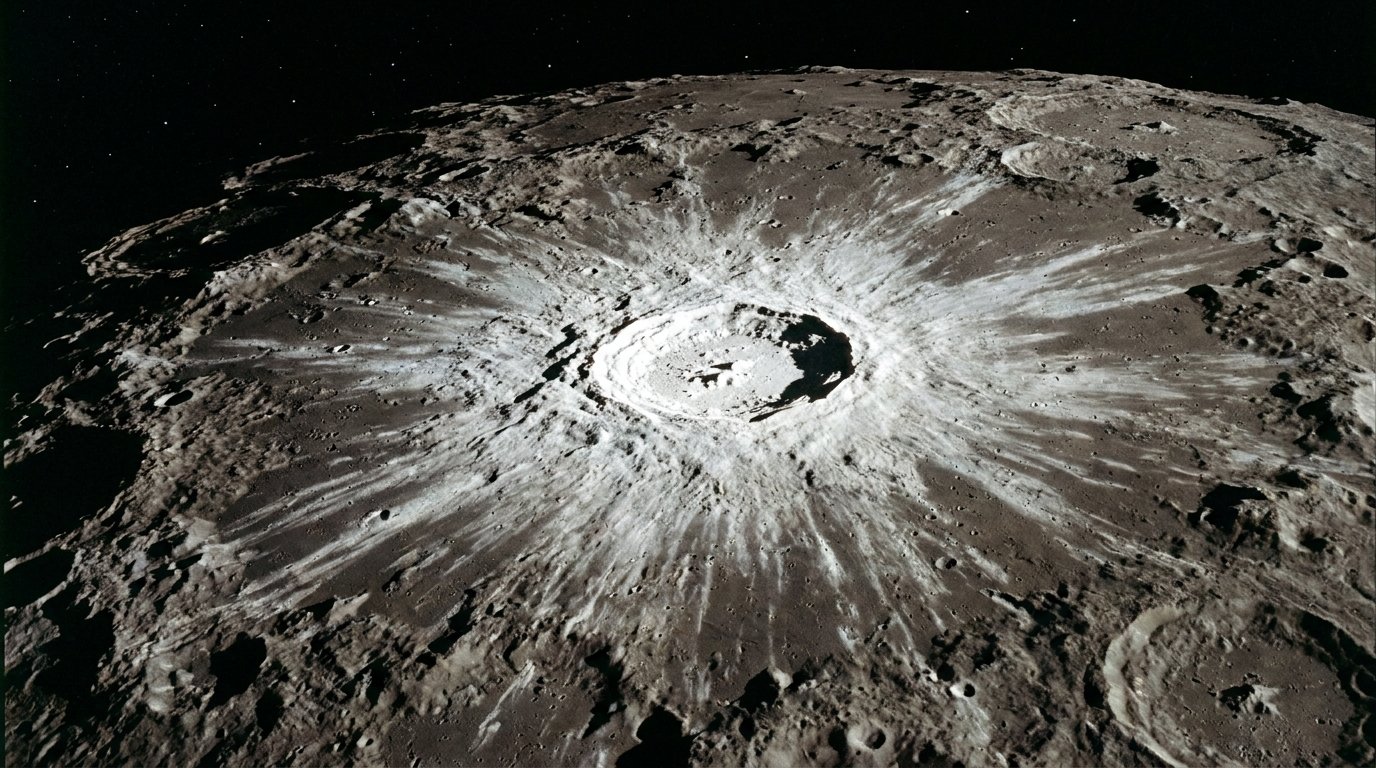
Somewhere on the Moon’s eastern edge, sometime in the spring of 2024, a piece of space rock roughly the size of a three- to six-story building slammed into the lunar surface hard enough to leave a scar visible from orbit. Nobody on Earth saw it happen. It took until 2025, and a sharp-eyed scientist scanning routine satellite images, for anyone to notice.
That’s the real story behind the new moon crater making headlines this month, and it’s a genuinely remarkable one, even without any exaggeration. NASA’s Lunar Reconnaissance Orbiter (LRO) helped identify what scientists now call the largest newly formed impact crater ever documented anywhere in the solar system. It’s a reminder that even a body as thoroughly mapped as the Moon can still surprise us, and it’s also a useful case study in how to responsibly research and write about a fast-moving space science story.
Below, we’ll walk through exactly what happened, correct a common misconception in how this story gets framed online, and then offer a practical, step-by-step guide for researching and writing about discoveries like this new moon crater accurately, whether you’re a science writer, a freelancer building a content niche, or just someone who wants to get the facts right.
What Is the New Moon Crater NASA Just Found?

The crater in question is officially named McGetchin, after Tom McGetchin, a former director of the Lunar and Planetary Institute. It measures roughly 222 meters (728 feet) wide and 43 meters (141 feet) deep, according to NASA, large enough to span the length of two football fields and deep enough to fit three school buses stacked on top of each other.
Scientists estimate the impact occurred sometime between April 11 and May 22, 2024, when a comet or asteroid fragment struck the Moon’s near side. An event of this scale is thought to happen roughly once every 132 years, making it an unusually rare, almost accidental discovery.
Here’s the detail worth clarifying: despite how the headline is often framed, the “before” comparison NASA scientists actually used wasn’t from 2022. According to NASA’s own reporting, researcher Robert Wagner, an image-processing specialist working with LRO data, spotted an unusual bright patch while reviewing newer orbital images and then compared it against earlier photographs of the same region, some dating back over a decade, to confirm the impact was recent. The exact “not there before” comparison spans a wider window than a single year, but the core claim holds: this new moon crater simply didn’t exist in earlier lunar imagery, and its sudden appearance is exactly what makes the discovery significant.

Follow-up observations added even more detail. NASA’s Diviner instrument detected a cold spot roughly 6.5 kilometers wide surrounding the crater, caused by the impact disturbing and loosening the Moon’s surface material, or regolith, in a way that changes how it retains heat. Researchers say the disturbed regolith becomes fluffier and less able to hold onto daytime heat, which is why it registers as noticeably colder during the lunar night. The findings were published in two papers in the journal Science Advances in September 2026.
For context, the previous record-holder for the largest newly formed crater found by LRO was roughly a third the size of McGetchin, discovered about a decade earlier. That makes this record-breaking find not just a rare event, but a genuinely notable one within the relatively short history of systematic lunar crater monitoring.
Step-by-Step Guide: How to Research and Write About a Discovery Like This Responsibly
Space science stories move fast and get simplified quickly online. Here’s a practical process for covering a new moon crater, or any similar breaking science story, accurately.
Step 1: Go Back to the Original Source

What to do: Find the actual NASA release or peer-reviewed paper before relying on secondhand summaries or social media posts.
Why it matters: Details like exact dimensions, dates, and instrument names are easy to blur across multiple reposts. NASA’s own science communications team typically publishes clear, detailed explanations that are far more reliable than a headline alone.
Example: In this case, going to NASA’s original release clarifies the actual impact timeframe (April–May 2024) and corrects the vaguer “wasn’t there before” framing used in many secondary articles.
Step 2: Identify Who Made the Discovery and How
What to do: Look for the specific scientist, team, or instrument responsible for the finding, not just the agency name.
Why it matters: This adds both credibility and human interest to your writing. In this case, the discovery came from Robert Wagner, an image-processing specialist, noticing an unusual bright spot while reviewing routine lunar maps, a detail that makes for a much stronger story than “NASA found a crater.”
Step 3: Check the Numbers Against Multiple Reputable Outlets

What to do: Cross-reference size, depth, and date figures across NASA’s release and at least one or two established science publications.
Why it matters: Figures like crater width or estimated impact frequency sometimes get rounded or slightly altered as they’re repeated across outlets. Confirming consistency protects your credibility and your readers’ trust.
Step 4: Explain Why the Discovery Matters, Not Just What Was Found

What to do: Connect the finding to broader context, such as what it reveals about impact frequency, lunar surface changes, or NASA’s plans for future lunar missions.
Why it matters: A bare fact (“a new moon crater was found”) is far less compelling than the context around it. This particular discovery matters partly because NASA is actively planning a sustained human presence on the Moon, and understanding impact risk and surface behavior is directly relevant to that.
Example: A useful angle here is connecting this discovery to planning considerations for future lunar bases: if impacts of this scale happen roughly once a century, that’s a genuinely relevant data point for engineers designing long-term lunar infrastructure, not just a fun space fact.
Step 5: Structure the Content for Both Readers and Search Visibility
What to do: Use clear, short paragraphs and descriptive subheadings that reflect how people actually search for this topic, such as questions about size, cause, or discovery date.
Why it matters: Well-structured science content performs better with both general readers and search engines, and it makes a complex topic much easier to follow.
Step 6: Consider the Freelance and Content Angle Carefully

What to do: If you write or create content professionally, treat breaking space-science stories as an opportunity to build topical authority in a niche, rather than chasing a single viral post.
Why it matters: Science and space content has a genuinely engaged, returning audience, but building freelance income or a content following around it depends on consistent accuracy and regular output over time, not any single story. Results vary significantly by writer, platform, and audience size, so it’s worth treating this as a long-term skill rather than a quick income source.
Common Mistakes to Avoid
- Repeating an inaccurate comparison date. Verify exactly which “before” and “after” images were actually compared, rather than repeating a specific year that may have been simplified or misquoted elsewhere.
- Skipping the scientific instruments involved. Naming the Lunar Reconnaissance Orbiter Camera or the Diviner instrument adds real credibility that generic phrasing like “NASA’s satellite” doesn’t.
- Overstating certainty about the impactor. Scientists describe the object as “a comet or asteroid fragment,” not a confirmed single source; don’t present it as more certain than the research does.
- Ignoring the publication source. This discovery was published in peer-reviewed papers in Science Advances; citing that adds real weight compared to only citing news coverage of it.
- Treating the story as isolated from NASA’s broader lunar plans. Context about ongoing lunar exploration makes the discovery more meaningful to readers.
Useful Tips
- Bookmark NASA’s official science communications pages so you have a first stop for verifying space-related headlines before writing about them.
- When reporting on measurements, include both metric and imperial units, since your audience spans regions that use each system differently.
- Look for direct quotes from the scientists involved; they often add more personality and credibility to space science writing than paraphrased summaries alone.
- If you’re building ongoing content around space discoveries, keep a simple running log of major lunar and planetary findings so you can reference past context accurately in future pieces.
- Treat any income from writing about science topics like this as a gradual outcome of consistent, accurate work rather than a guaranteed result from a single trending story.
Frequently Asked Questions
How big is the new moon crater NASA found? McGetchin crater measures about 222 meters (728 feet) wide and 43 meters (141 feet) deep, roughly the length of two football fields and deep enough to stack three school buses inside.
When did the crater actually form? Scientists estimate the impact occurred sometime between April 11 and May 22, 2024, based on comparisons of lunar images taken before and after that window.
Who discovered the crater, and how? Robert Wagner, an image-processing specialist working with NASA’s Lunar Reconnaissance Orbiter data, noticed an unusual bright spot while reviewing lunar maps and confirmed it was a new impact by comparing it against earlier imagery.
Why is this new moon crater considered such a significant discovery? It’s officially the largest newly formed impact crater ever documented in the solar system, and impacts of this scale are estimated to occur only about once every 132 years.
Does this discovery affect NASA’s future Moon missions? It could. Understanding how frequently large impacts occur, and how they affect the surrounding surface, is directly relevant as NASA plans a longer-term human presence on the Moon.
Final Thoughts

The real story behind this new moon crater is arguably more interesting than the simplified headline suggests: a rare, once-in-a-century impact that went completely unnoticed until a scientist happened to spot an unusual bright spot while reviewing routine data. That’s a good reminder that even well-mapped, familiar places can still hold surprises, and that getting the details right, dates, instruments, and sources, makes for far more credible and useful science writing than repeating a viral headline.
If you’re planning to write about discoveries like this, the practical next step is straightforward: go back to the original NASA source, verify the specifics, and explain why the finding matters rather than just that it happened. That approach will serve your readers, and your credibility, far better than chasing the most dramatic version of the story.
Click this link to read our important and interesting articles as soon as they are published!