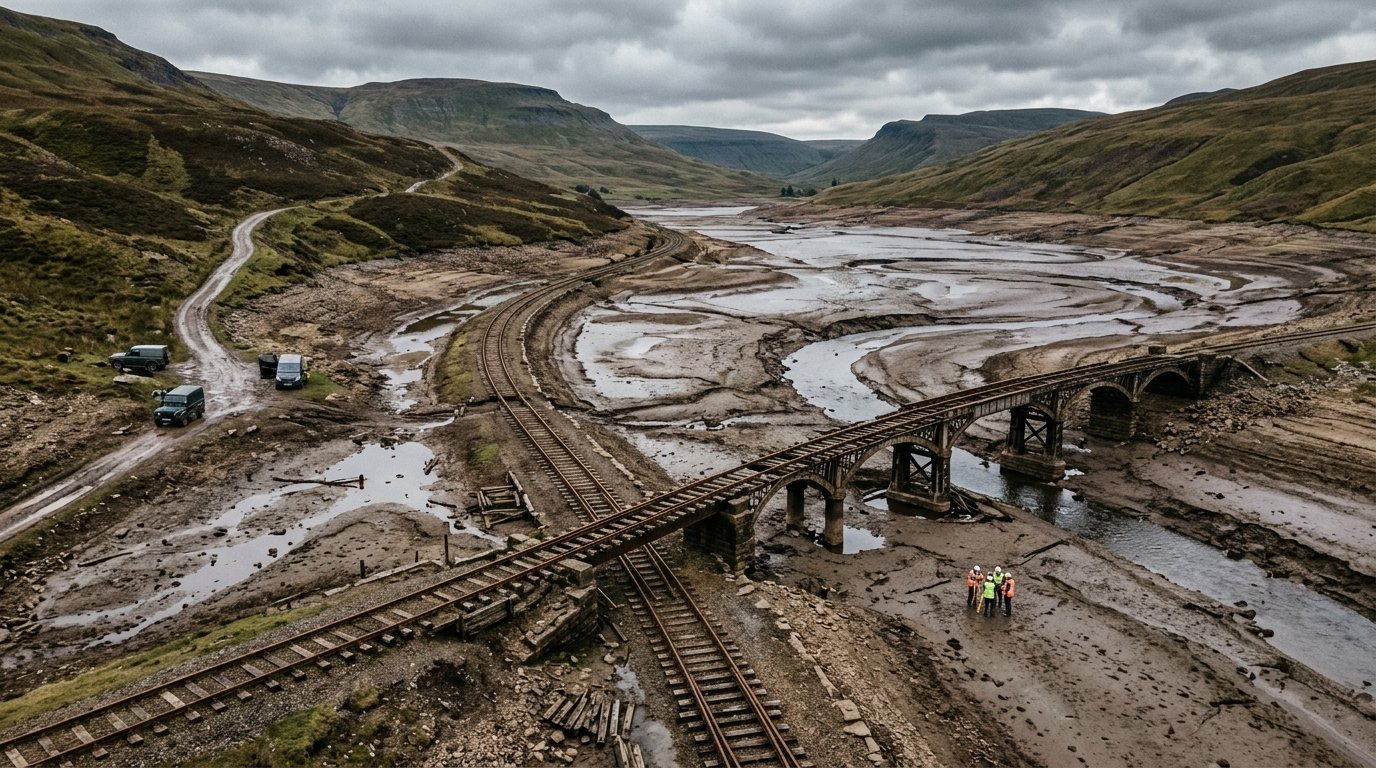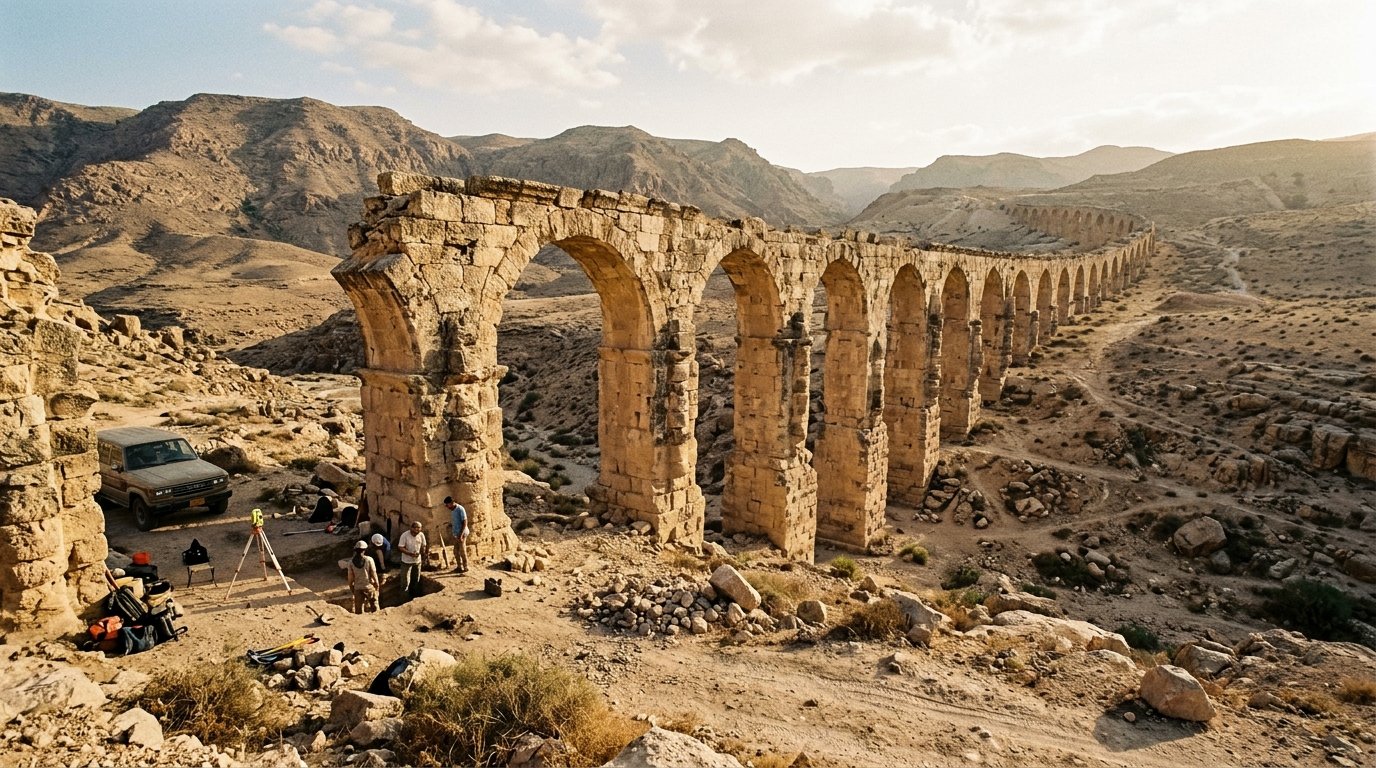
Headlines love a clean, dramatic claim: a single 4,000-year-old aqueduct, unearthed after millennia, rewriting everything we thought we knew. The truth, as usual with ancient engineering, is a little more layered — and honestly more interesting once you dig into it.
There isn’t one lone 4,000-year-old aqueduct sitting under a spotlight. What actually exists is a well-documented body of evidence — irrigation canals, water-lifting systems, and engineered channels from Mesopotamia dating back roughly 4,000 years, alongside the Assyrian-built Jerwan Aqueduct from around 700 BC, widely considered the oldest known aqueduct in the structural sense. Together, they confirm something historians have known for a while: Rome didn’t invent water engineering. It inherited, refined, and scaled up techniques that were already centuries, even millennia, old.
This matters beyond trivia. Understanding the real timeline of the oldest aqueduct systems tells us something about how civilizations solve hard infrastructure problems, and it’s also a genuinely compelling subject for anyone building content, research, or freelance writing work around history and engineering topics. Below, we’ll walk through what the evidence actually shows, followed by a practical step-by-step guide for researching and writing about ancient engineering history accurately.
What Do We Actually Mean by the “Oldest Aqueduct”?

The confusion starts with the word “aqueduct” itself. Technically, an aqueduct is any engineered channel — open, covered, or elevated — built to move water from a source to where it’s needed. By that definition, the oldest aqueduct systems aren’t Roman at all.
Mesopotamian civilizations, in the region now covered by modern Iraq, were building irrigation canals and water-management networks as early as 4,000 years ago, during the Old Babylonian period. These weren’t primitive ditches; they required surveying, gradient control, and coordinated maintenance across entire farming regions, and they’re referenced directly in legal codes like Hammurabi’s, which included rules governing canal upkeep and water disputes.

Centuries later, around 700 BC, the Assyrian king Sennacherib commissioned the Jerwan Aqueduct, a stone structure that carried water across a valley to supply the city of Nineveh. It’s often cited as the oldest known aqueduct in the more specific architectural sense — a raised, bridge-like structure rather than a ground-level canal — and it predates Rome’s first aqueduct, the Aqua Appia, by roughly four centuries.
The Jerwan Aqueduct’s scale is worth pausing on. Archaeological surveys estimate it stretched more than 280 meters across a river valley, built from massive limestone blocks, some measuring roughly a meter across. Sennacherib had inscriptions carved directly into the stonework describing the project, some positioned in ways that suggest they were meant to be read only after the structure eventually fell into ruin — a small but telling detail about how deliberately this engineering feat was documented for future generations.

So the honest version of the headline isn’t “one aqueduct just rewrote history.” It’s that the oldest aqueduct systems, in both the broad and narrow sense, were already advanced engineering achievements long before Rome existed as a city with running water.
It’s also worth noting that Mesopotamia and Assyria weren’t alone. Around the same era, the Indus Valley civilization built elaborate stepwells, reservoirs, and drainage networks at sites like Dholavira, in present-day India, demonstrating that sophisticated water management was emerging independently across multiple ancient civilizations. None of these systems fits neatly into a single “oldest aqueduct” headline, but together they paint a much richer picture than any one discovery could on its own.
Step-by-Step Guide: How to Research and Write About Ancient Engineering History Accurately
If a topic like this interests you enough to research, write about, or build content around, here’s a practical process for doing it responsibly and well.
Step 1: Separate the Headline From the Documented History

What to do: Before writing anything, trace a viral claim back to its actual archaeological or academic source, rather than repeating the headline as-is.
Why it matters: Ancient history topics are especially prone to exaggerated framing online. A claim like “the oldest aqueduct just rewrote history” often compresses decades of established research into a misleading single-discovery narrative.
Example: In this case, the real story spans Mesopotamian canal engineering (roughly 4,000 years old) and the Assyrian Jerwan Aqueduct (about 2,700 years old) — two different things, both genuinely older than Rome’s water systems, but not one single “just found” structure.
Step 2: Use Academic and Institutional Sources First

What to do: Start with university archaeology departments, museum collections, and peer-reviewed publications before relying on general web content.
Why it matters: Institutions studying sites like Jerwan have published detailed architectural surveys and inscription translations, giving you a far more reliable foundation than secondhand summaries, and they’re often the only sources that clearly explain how “oldest aqueduct” claims are actually measured and verified.
Step 3: Get the Timeline Right

What to do: Build a simple, clearly labeled timeline: Mesopotamian canals (~2000 BC), the Jerwan Aqueduct (~700 BC), and Rome’s Aqua Appia (312 BC), noting what each source actually claims.
Why it matters: Precision on dates is what separates credible history writing from clickbait. Readers and search engines both respond well to content that’s specific rather than vague.
Vague framing like “thousands of years old” might sound impressive, but it also makes fact-checking harder for readers and reduces the credibility of your writing among people who already know the subject. Naming specific centuries, dynasties, or archaeological periods signals that you’ve actually done the research rather than repeated a headline.
Step 4: Explain the Engineering, Not Just the Age

What to do: Describe how these systems actually worked — gradient-based gravity flow, canal maintenance schedules, or stone construction techniques — rather than only stating how old they are.
Why it matters: The engineering detail is what makes ancient water systems genuinely impressive, and it’s also what makes for more substantive, shareable content than a bare age claim.
Example: The Jerwan Aqueduct used massive ashlar stone blocks and inscriptions built directly into the structure, some seemingly meant to be read only after the building eventually fell into ruin — a detail far more interesting than the number “700 BC” on its own.
Step 5: Structure the Content for Readers, Not Just Search Engines

What to do: Use clear headings, short paragraphs, and a logical build from broad context to specific detail, rather than dense academic paragraphs.
Why it matters: Ancient engineering history has a genuine, engaged online audience, but only when it’s presented in an approachable way. Good structure keeps both casual readers and search algorithms happy.
Step 6: Consider This as a Long-Term Content or Freelance Niche
What to do: If you’re a freelance writer, blogger, or content creator, treat historical engineering topics as one recurring niche among several, and track which specific angles (timelines, myth-busting, engineering breakdowns) get the most engagement.
Why it matters: History and archaeology content can build a loyal, returning audience, but income from freelance writing, blogging, or content creation in this space depends heavily on consistency, research quality, and audience-building over time — it isn’t a guaranteed or fast source of income, and results vary widely by writer and niche.
Common Mistakes to Avoid

- Treating a single article as the definitive source. Cross-check ancient engineering claims against academic or museum sources before publishing.
- Conflating different types of water systems. Canals, qanats, and structural aqueducts are related but distinct engineering categories; using them interchangeably creates confusion.
- Overstating “rewrites everything” claims. Historians have known about pre-Roman water engineering for decades; framing it as a brand-new revelation misleads readers.
- Skipping the “why it matters” context. A date alone doesn’t explain why ancient engineering achievements were impressive; the methods and constraints they overcame do.
- Ignoring regional context. Mesopotamian, Assyrian, and later Roman water systems developed under very different political and geographic conditions worth explaining, not glossing over.
Useful Tips

- Keep a running reference list of reliable sources (university archaeology pages, museum records) for any ancient engineering topics you write about regularly, including how each source defines and dates the oldest aqueduct examples it discusses.
- When comparing ancient civilizations, always clarify whether you’re discussing “first known example” versus “most advanced example” — they’re often different answers.
- Use specific measurements and construction details where available; they add credibility and reader interest far more than superlatives like “amazing” or “incredible.”
- If you’re building a content library around ancient history, consider grouping related topics (aqueducts, irrigation, urban planning) so your site develops topical authority over time.
- Treat any freelance or content-creation income from this niche as a gradual outcome of consistent, well-researched work rather than a guaranteed result.
Frequently Asked Questions
Was Rome really not the first to build an aqueduct? Correct. Mesopotamian irrigation canals date back roughly 4,000 years, and the Assyrian Jerwan Aqueduct was built around 700 BC, both well before Rome’s first aqueduct, the Aqua Appia, in 312 BC.
What makes the Jerwan Aqueduct significant? It’s widely considered the oldest known aqueduct in the structural sense — a raised stone channel carrying water across a valley — built centuries before comparable Roman engineering.
Is the “4,000-year-old aqueduct” headline accurate? It’s an oversimplification. The 4,000-year figure reflects Mesopotamian canal systems broadly, not a single recently discovered structure, while the Jerwan Aqueduct specifically is closer to 2,700 years old.
Did Rome improve on earlier water engineering? Yes. Rome’s contribution was largely one of scale and standardization, building extensive networks of aqueducts using techniques that had already existed in earlier civilizations.
Can writing about ancient history topics become a reliable income source? It can contribute to freelance writing or content-creation income over time, but results depend on research quality, consistency, and audience growth rather than any single article or topic.
Are qanats older than the Jerwan Aqueduct? Qanat systems in the Middle East date back roughly 3,000 years, making them younger than the earliest Mesopotamian canals but older than many later Roman aqueducts. They’re a different engineering approach — underground gravity-fed tunnels rather than raised structures — and are sometimes mistakenly grouped into oldest aqueduct comparisons despite working quite differently.
Final Thoughts
The real story behind the world’s oldest aqueduct systems isn’t a single dramatic reveal — it’s a long, well-documented history of civilizations solving the same hard problem, moving water reliably across long distances, centuries before Rome ever attempted it. That’s arguably more impressive than any single headline could capture.
If you’re planning to research or write about topics like this, the practical next step is simple: trace the claim to its actual academic source, get the timeline right, and explain the engineering itself rather than leaning on the age alone. That approach will build far more credibility with your readers than chasing the most dramatic version of the headline.