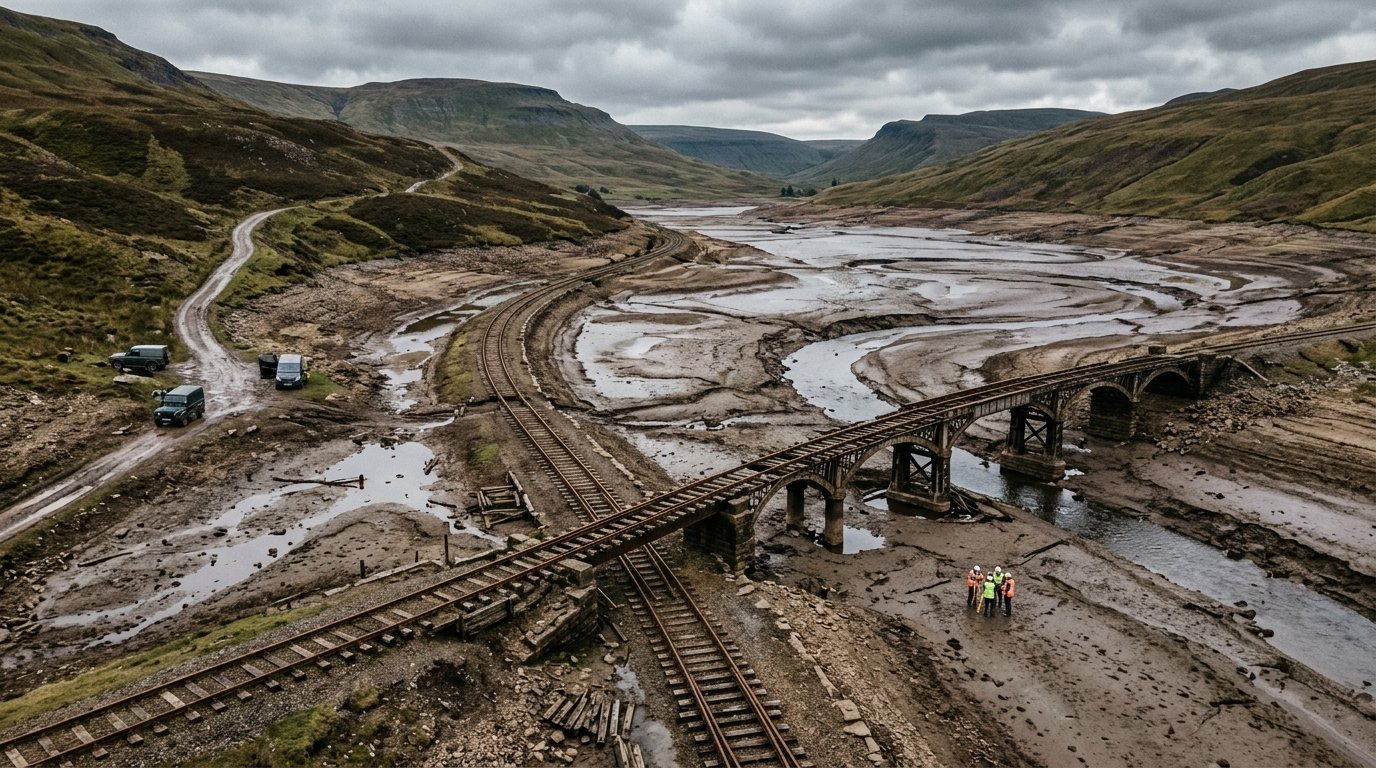
You may have seen the headline circulating online: a “Death Railway” station reappearing after 80 years underwater. It’s a striking image — old iron and timber emerging from a drained reservoir bed — and it’s easy to see why it went viral. The real story is slightly different from the viral headline, but arguably more interesting.
What actually surfaced is Nithe Station, a former depot on Thailand’s infamous World War II-era railway, submerged for more than four decades since a dam was built over the area in the 1980s. The railway itself is more than 80 years old, built during the war by prisoners of war and forced laborers. That distinction matters if you’re writing about it, researching it, or planning to see it in person — and it’s exactly the kind of nuance worth understanding before you build content around a trending topic.
This guide breaks down what actually happened at the site, why it’s drawing historians and travelers from around the world, and — because a temporary, newsworthy event like this is also a real opportunity for remote workers, freelance writers, and travel content creators — a practical, step-by-step approach to visiting and documenting the Death Railway station responsibly before the reservoir refills.
What Actually Happened at the Death Railway Station

The Death Railway earned its grim nickname during World War II. Japanese forces built the 415-kilometer line connecting Thailand (then Siam) and Myanmar (then Burma) using more than 100,000 Allied prisoners of war and Asian laborers, many of whom died from disease, starvation, and brutal working conditions. The railway later became internationally known through the novel and film “The Bridge on the River Kwai.”
Nithe Station was one of more than 60 stops along that original line, serving as a refueling and resupply point. Decades after the war, Thailand’s Electricity Generating Authority built the Vajiralongkorn Dam, and the resulting reservoir submerged Nithe Station and long stretches of the surrounding railway embankment.

Earlier this year, routine maintenance work required draining the reservoir, and the water level dropped enough to expose sections of the old Death Railway station for the first time in decades. Structural remains, rail beds, and old operational infrastructure became visible on the dry reservoir floor, drawing researchers, descendants of former POWs, and thousands of local visitors before the rainy season was expected to refill the basin.
For historians, this is a rare, time-limited chance to document a site that’s normally invisible. For travelers and content creators, it’s a similarly rare window — but one that comes with real responsibilities around access, safety, and respectful storytelling.
Step-by-Step Guide: How to Visit and Document the Death Railway Station
Step 1: Confirm Current Site Status Before You Travel

What to do: Before booking anything, check recent local news sources and official Kanchanaburi provincial tourism updates for the current water level and access status.
Why it matters: Exposure of the Death Railway station is directly tied to dam maintenance schedules and seasonal rainfall. The reservoir can begin refilling with little notice once the rainy season arrives, and a site that’s accessible one month may be partially or fully submerged the next.
Example: A travel blogger planning a Southeast Asia itinerary around this story should build in a flexible window rather than a fixed date, and confirm access within a week or two of departure.
Step 2: Plan Your Route to Kanchanaburi and Sangkhlaburi

What to do: Nithe Station sits near Sangkhlaburi in Kanchanaburi province, western Thailand, roughly a half-day’s travel from Bangkok by bus or car. Research current transport options, road conditions, and whether local guides are available.
Why it matters: This isn’t a site with a polished visitor center — access has historically depended on local knowledge, water levels, and sometimes landowner permission for nearby areas. Planning your route with a local guide or tour operator familiar with the Death Railway station reduces wasted time and improves safety.
Step 3: Respect the Site’s History and Access Rules

What to do: Treat the area as a historical and, in many respects, a memorial site. Thousands of people died building this railway. Follow any barriers, signage, or instructions from local authorities and avoid removing artifacts.
Why it matters: Sites connected to the Death Railway hold deep significance for descendants of POWs and local communities. Respectful behavior isn’t just an ethical baseline — it also affects whether content creators are welcomed back by local operators and communities for future work.
Step 4: Bring the Right Gear for Content Creation

What to do: Pack lightweight, weather-resistant camera or phone gear, a portable power bank, and offline maps, since connectivity near the reservoir can be inconsistent.
Why it matters: Reservoir beds are exposed, uneven, and often muddy or dusty depending on recent weather. Reliable, simple gear beats bulky equipment you can’t easily carry across terrain that wasn’t built for visitors.
Step 5: Capture Content Responsibly
What to do: Photograph and film the structural remains and landscape rather than treating the site as a casual backdrop. Include context in captions — the site’s history, current exposure status, and sourcing for any historical facts you reference.
Why it matters: A site like this one attracts attention precisely because of its history. Content that acknowledges that history performs better with informed audiences and avoids the tone-deaf framing that sometimes surrounds viral travel content at sensitive historical locations.
Example: Instead of a caption like “found this cool abandoned station,” a more accurate and respectful framing is “this WWII-era depot was built by POWs and laborers and has been underwater for over 40 years — it’s only visible now because of dam maintenance.”
Step 6: Turn the Visit Into Freelance or Side-Income Content
What to do: If you write, photograph, or produce video for income, consider pitching a well-researched piece to travel or history publications, or building a long-form blog post, YouTube video, or photo essay around the visit.
Why it matters: Time-sensitive, real-world stories like the reappearance of a Death Railway station are exactly the kind of content that travel and history outlets look for, since they combine visual interest with genuine news value. This is a practical example of how freelance writers and remote content creators can turn travel into paid or portfolio-building work, without relying on unrealistic income promises — results depend on your existing audience, pitch quality, and the publications you approach.
Step 7: Combine the Trip With Remote Work Logistics in Thailand

What to do: If you’re working remotely while traveling, research coworking spaces and reliable internet options in Kanchanaburi or nearby Bangkok, and check current Thai visa requirements for your length of stay.
Why it matters: Thailand remains a popular base for digital nomads, but visa rules and remote-work regulations do change, so it’s worth confirming current requirements directly with Thai immigration authorities or your embassy rather than relying on outdated blog posts, before combining a reporting trip with longer-term remote work.
Common Mistakes to Avoid
- Assuming the site will still be exposed later. Water levels change quickly once the rainy season begins; don’t delay a planned visit without checking current conditions.
- Treating the area as a casual tourist backdrop. This site is tied to a documented history of forced labor and mass death; framing matters.
- Skipping local guides. Terrain around a drained reservoir can be unstable, and local knowledge significantly improves both safety and access.
- Publishing content without fact-checking historical details. Numbers, dates, and names connected to WWII history are well documented — verify them rather than repeating unsourced viral claims.
- Overpromising income from travel content. Freelance and content-creation income from a single trip or story is realistic but variable; avoid guaranteeing results to yourself or an audience.
Useful Tips
- Follow reputable regional news outlets for updates on Death Railway station access, since conditions can shift within weeks.
- If you’re pitching this story to an editor, lead with the historical accuracy (40-plus years underwater, an 80-plus-year-old railway) rather than the more sensational “80 years underwater” framing.
- Build relationships with local tour operators in Kanchanaburi; they’re often the fastest and most reliable source of current site information.
- Keep a research file of primary sources (museum records, war memorial data) if you plan to write about the railway’s history in depth.
- If combining this with remote work, test your accommodation’s internet speed before committing to a longer stay.
Frequently Asked Questions
Is the Death Railway station still visible right now? Visibility depends on the Vajiralongkorn Dam’s water level, which is tied to maintenance schedules and seasonal rainfall. Check current local news or provincial tourism sources before planning a trip.
Was the station really underwater for 80 years? Not quite. The railway itself dates back more than 80 years to World War II, but the station was submerged specifically for around four decades, since the dam’s reservoir was created in the 1980s.
Is it safe to visit the exposed reservoir area? Conditions can include uneven, muddy, or unstable ground. A local guide familiar with the area is strongly recommended, and visitors should follow any official access restrictions.
Can I make money writing about this kind of event? It’s possible to pitch well-researched, timely travel or history stories to publications, or build audience-driven content around them, but outcomes vary and shouldn’t be treated as guaranteed income.
Where can I learn more about the railway’s full history? Museums in Kanchanaburi, war memorial archives, and established historical research organizations are reliable places to start, alongside first-hand accounts collected by researchers who specialize in the railway’s history.
Final Thoughts
The reappearance of the Death Railway station is a genuinely rare event — a submerged piece of World War II history exposed for a limited window before the reservoir refills. For history enthusiasts, it’s a chance to see something normally hidden. For remote workers, freelance writers, and travel content creators, it’s a real-world example of how a well-timed, well-researched story can become meaningful, portfolio-worthy work.
If you’re planning to visit or write about it, the practical next step is simple: confirm current access conditions, plan your trip with respect for the site’s history, and if you’re building content or pitching stories for income, prioritize accuracy over sensational framing. That approach will serve both your readers and your long-term credibility far better than chasing a viral headline alone.